
Context:
A mid-sized company in the renewable energy sector wanted to professionalise its contract management practice and, to that end, to put dedicated processes and tools in place, built around its pre-sales and project management processes. A clear objective was set: save time and make contracts more secure, both during negotiation and during performance.
Requirement:
To achieve this, the client needed a rapid diagnostic of existing practice, so as to avoid creating yet another form or spreadsheet and instead weave the new practices into the group’s current habits and ways of working, avoiding needless resistance to change and delivering quick results.
Prime Conseil’s involvement
Over an engagement lasting a few weeks, our consultant began by collecting and analysing the existing material (bid evaluation grid, bid presentation and approval decks, project financial analysis, provisions tracking spreadsheet, and so on), then met and interviewed the various players across the contract lifecycle (business developers, pre-sales engineers, management controllers, lawyers, project managers, senior management). These first two stages brought a number of improvement areas and needs to light:
- a lack of uniformity in the way risks and opportunities are identified, analysed and weighted,
- a fairly significant number of spreadsheets and files to complete, some of them unknown to certain contributors,
- a contract management culture that was not especially strong, despite some good instincts,
- no central home for information,
- silos between the stages of the contract lifecycle (documents completed at bid stage do not carry over into the project phase).
Faced with these findings, the work involved:
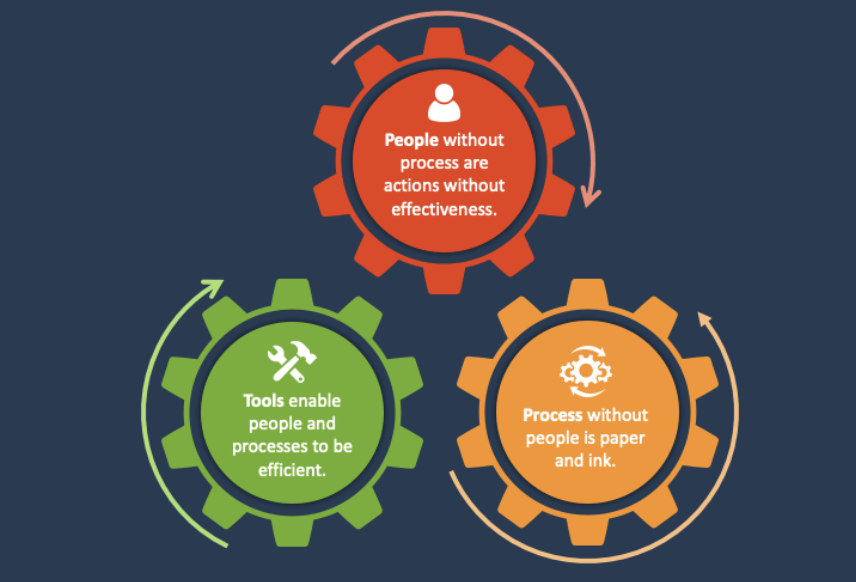
- rethinking the process as a whole, in order to build contract management into existing forms and documents rather than adding to the administrative burden
- raising awareness among the various players of the value of contract management, and of what these processes bring in terms of time saved, overall visibility and information sharing
- creating interconnected files that avoid double entry, pass information automatically to the project manager at handover, and generate visuals that can be dropped straight into the slides (in line with the existing process)
- formalising simple, actionable processes through summary sheets and a RACI
- working iteratively, with review points (lessons learned) at one, two and three months to see what works and what does not, and to adjust the files accordingly.
Outcome:
Rather than deploying new tools, the recommendation was to build contract management into the existing tools and reduce their number. This proposal from our consultant was warmly welcomed, both by senior management and by the teams who use these tools day to day and saw their workload lightened. Rolling out the new processes and tools was also an opportunity to remind everyone involved in the contract, once again, what contract management actually is.